
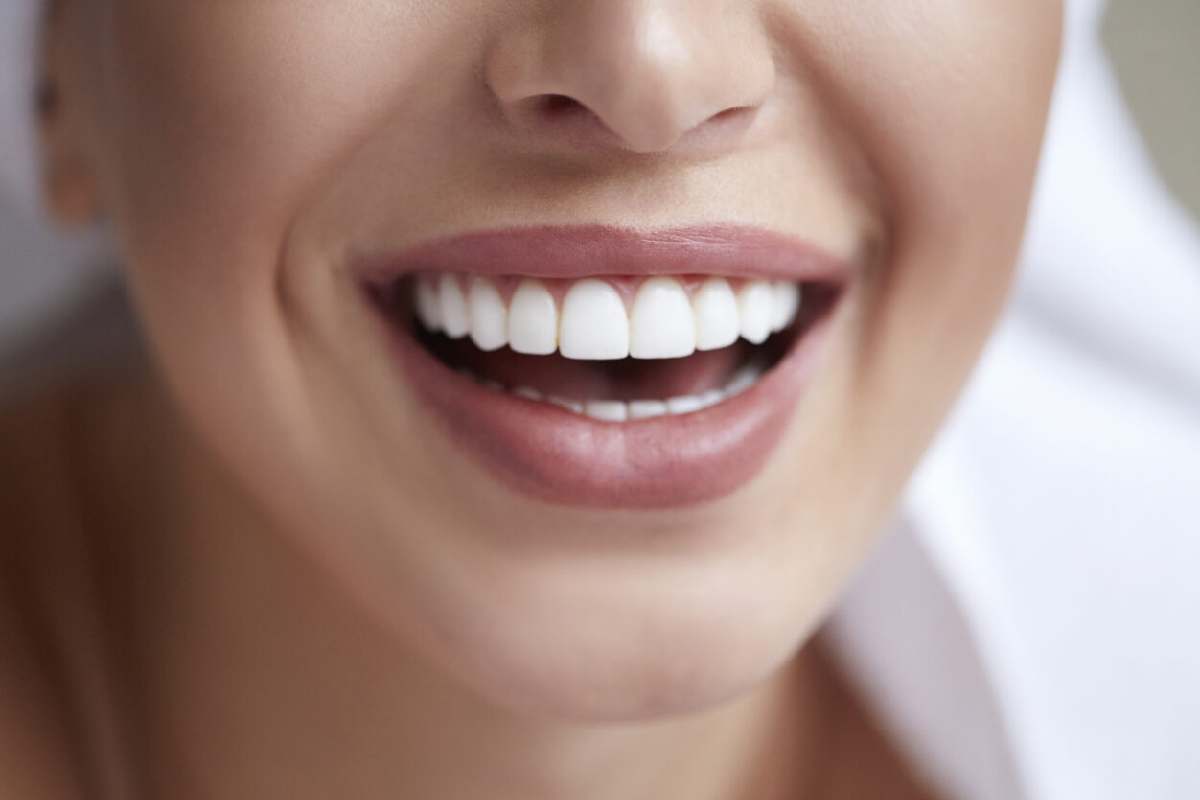
Cosmetic dentistry has grown very fast in the last few years. Earlier, setting chipped or stained teeth meant time taking treatments or braces. Now, veneers make it possible to change a smile in a short time. Individuals not only search for dental veneers because they want “perfect” teeth. Most of the people prefer teeth that look clean, even, and normal. Something that feels comfortable and look good when smiling or talking.
Dental veneers are gaining popularity not only in local clinics but also in countries like Turkey, India, the UK, and the USA, where dental tourism has grown a lot. One main thing many individuals miss is that the veneer material matters more than the country.
This article explains veneer materials in simple terms, their costs, the time required, alternatives, and the realistic results individuals can expect.
Table of Contents
Dental Veneers Explained Visually
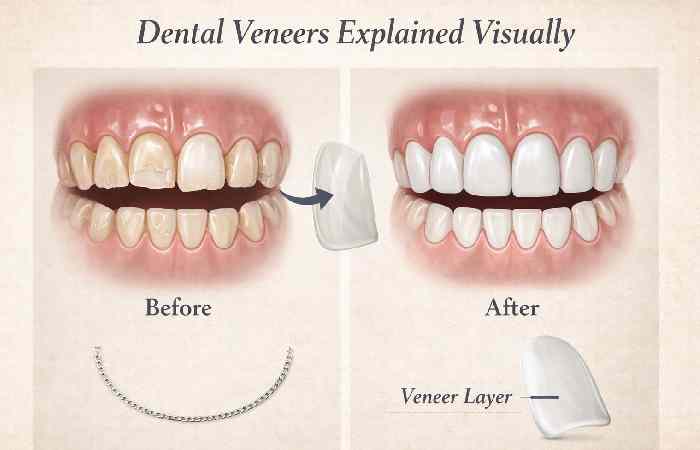
Dental veneers are thin shells placed on the front of teeth to improve appearance. They are widely used in cosmetic dentistry globally due to their fast and visible results.
| Feature | Natural Teeth | Dental Veneers |
| Color | May stain | Stain-resistant |
| Shape | Uneven | Custom-shaped |
| Surface | Porous | Smooth finish |
| Smile appearance | Natural | Enhanced |
What Are Dental Veneers?
Dental veneers are very thin covers placed on the front side of teeth. It does not fix medical problems. They are mainly used to improve how teeth look.
Dentists generally suggest veneers for:
- Individuals whose broken or chipped front teeth
- To the peoples whose teeth are uneven or badly shaped
- Gaps between teeth
- Who has yellow or stained teeth that don’t progress with whitening
Veneers teeth are custom-made. That means the dentist takes measurements or scans of individuals teeth first. In most of the cases, a small layer of enamel is removed so the veneer sticks suitably and doesn’t look huge.
Are Dental Veneers Permanent?
Dental veneers are often considered permanent because a small amount of enamel is removed during the procedure. Once placed, dental veneers cannot be reversed, especially porcelain ones.
| Veneer Type | Permanent | Removable | Lifespan |
| Porcelain | Yes | No | 10–15 yrs |
| Composite | Semi | No | 4–7 yrs |
| Lumineers | No | Sometimes | 5–10 yrs |
RESOURCE LINK:
https://www.ada.org/resources/research/science-and-research-institute/oral-health-topics/
Different Types of Dental Veneer Materials
For all veneers does not work the same way. It depend on the type of material how natural they look, how long they last, and how much money an individual will spend.
Porcelain Veneers
The most used worldwide is Porcelain veneers, mainly for full smile makeovers.
Why individuals prefer porcelain:
- Very close to natural tooth color
- Don’t stain easily from coffee or tea
- Can last 10 to 15 years with proper care
- Thin but strong
Things to know before choosing:
- Cost is high compared to other options
- If a it get breaks, it generally needs replacement
Ceramic Veneers
It is similar to porcelain but are made using a slightly different process.
Why some individuals choose ceramic:
- Natural look without being too shiny
- Strong and long-lasting
- Works well for small shape corrections
Possible drawbacks:
- Takes more time to prepare
- Teeth may feel sensitive for a short time after placement
- After placement for some time teeth may feel sensitive
Individuals who want a balance between strength and appearance often pick ceramic veneers.
Composite Veneers
Composite veneers are made from tooth-colored resin material and common for quick cosmetic fixes.
Why people go for composite veneers:
- Lower price
- Can be completed in one dental visit
- Less enamel removal
- Limitations to keep in mind:
- Stains faster than porcelain
- Doesn’t last as long (around 4–7 years)
- Can chip or crack more easily
Composite veneers work well for people who want visible improvement without high cost.
Veneer Material Comparison
| Material | Natural Look | Average Life | Cost Level | Repair Possible |
| Porcelain | Very high | 10–15 years | High | No |
| Ceramic | High | 8–12 years | High | No |
| Composite | Medium | 4–7 years | Low | Yes |
Alternatives to Traditional Veneers
Some people don’t like the idea of removing enamel. For them, alternatives exist.
Lumineers
- Very thin porcelain
- Little to no tooth shaving
- Can be removed in some cases
- Don’t last as long as regular veneers
Teeth Whitening
- No drilling or filing
- Affordable
- Works only for color, not shape or gaps
Dental Bonding
- Resin applied directly to teeth
- Budget-friendly
- Best for small fixes, not full smile changes
How Much Do Veneers Cost? (India, UK, USA)
| Country | Porcelain (Per Tooth) | Composite | Ceramic |
| India | ₹15,000 – ₹35,000 | ₹5,000 – ₹10,000 | ₹20,000 – ₹40,000 |
| UK | £600 – £1,200 | £250 – £400 | £700 – £1,300 |
| USA | $900 – $2,500 | $250 – $600 | $1,000 – $2,800 |
- Costs depend on clinic reputation, city, and dentist experience.
- 2 front teeth veneers cost in India: ₹20,000 – ₹60,000
- Cost varies based on clinic and dentist expertise
Veneers Teeth Pros and Cons
| Pros | Cons |
| Natural look | Costly |
| Long-lasting | Irreversible procedure |
| Stain-resistant | May need replacement |
| Quick results | Sensitivity possible |
- Best for confidence boost
- Not a medical necessity
- Depends on dentist skill
Where Are Veneers Commonly Done? (Country-wise)
| Country | Cities | Clinic Type |
| India | Mumbai, Delhi, Chennai | Private dental hospitals |
| UK | London, Manchester | Cosmetic dental clinics |
| USA | New York, Los Angeles, Miami | Aesthetic dental centers |
| Turkey | Istanbul, Antalya | Medical tourism clinics |
How Much Time Does the Veneer Process Take?
| Veneer Type | Time Needed |
| Porcelain | 7–10 days (2–3 visits) |
| Ceramic | 10–14 days |
| Composite | Same day |
| Lumineers | 5–7 days |
Before and After Veneers: What Changes in Real Life?
| Aspect | Before | After |
| Tooth color | Dull or stained | Even and brighter |
| Tooth shape | Uneven or chipped | Smooth and balanced |
| Gaps | Clearly visible | Reduced or closed |
| Smile confidence | Low | Much higher |
| Photos | Avoided | Comfortable smiling |
How Fast Are Results Visible?
One reason veneers are popular is speed.
- Composite veneers → Results on the same day
- Porcelain or ceramic → Final smile in 1–2 weeks
- Lumineers → Around one week
Compared to braces, veneers give much faster visual change.
Realistic Expectations (Very Important)
Veneers improve teeth appearance. They don’t change facial shape or personality.
Keep these points in mind:
- Veneers age like natural teeth
- Gum health affects how good they look
- Dentist skill matters more than clinic ads
Case Study: Real Example
| Detail | Information |
| Age | 32 |
| Country | UK |
| Issue | Yellow and uneven front teeth |
| Veneer Type | Porcelain |
| Teeth Treated | 6 front teeth |
| Total Time | 9 days |
| Outcome | Natural smile, better confidence |
Choosing the Right Dental Veneers Material
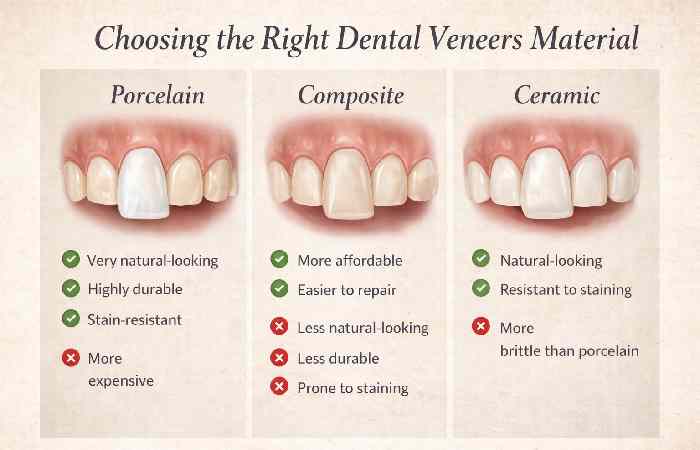
| Material | Best For | Durability | Cost |
| Porcelain | Full smile makeover | High | High |
| Ceramic | Natural look | Medium | High |
| Composite | Budget fixes | Low | Low |
RESOURCE LINK
https://www.nhs.uk/live-well/healthy-teeth-and-gums/dental-treatments/
Dental Veneers Amazon and DIY Trends
Many people search for Dental Veneers Amazon kits, but these are temporary cosmetic covers and not real dental veneers.
| Feature | Professional Veneers | Amazon Kits |
| Custom fit | Yes | No |
| Durability | Years | Days/weeks |
| Safety | Dentist-approved | Risky |
| Results | Natural | Artificial |
Why Veneers Are More Popular Now
- Social media and selfies
- Video calls and remote work
- Dental tourism growth
- Better materials than before
Final Thoughts
Veneers are not about having perfect teeth. They’re about feeling normal and confident when you smile.
Porcelain veneers are still the top choice, but composite and ceramic options work well for many people. The best choice depends on budget, time, and expectations.
Always talk to a qualified dentist before deciding. A good smile should still look like you — just a little more confident.
